
Law & HR
The professional services at the
heart of the rehab sector


Dealing with boundaries
when working in a private home
Cecily Lalloo, managing director of Embrace HR, assesses the importance of establishing professional boundaries and why they must be put in place


Professional Boundaries
The quality of a support worker’s relationship with their client is very important. It is essential to create a warm, kind, homely and friendly environment. Sometimes, however, this closeness can blur professional boundaries and cause misunderstandings and difficulties for the support worker and the parents of the young people in their care.
Many of our clients are young children and parents and family are the first point of contact on a daily basis with the support worker. It is really important that both the support worker and the parents work together to understand their roles, their limits and the employer’s policies.
Professional boundaries are the rules and limits that prevent the lines between the support worker and the client from becoming blurred. These boundaries are there to help maintain a safe working environment. It is important to set boundaries from the outset. Where parents are acting on behalf of the young person (the employer) they often assume the role of informal team leader, and therefore need to draw the line between what is appropriate and what is not. There is a fine balance between being a supportive employer and having a personal affiliation between both employees and family members. It can be difficult differentiating between being a worker and being a friend.
Examples of boundaries
It can be a tricky balance to know how much personal information to share with an employee. It is acceptable to talk generally about family and personal life if it helps to build a relationship with the support worker and vice versa.
Here is a non-exhaustive list of potential issues that can cross boundaries:
> Not respecting the each other’s privacy;
> Visiting outside of contracted working hours without an invitation;
> Buying, selling or lending personal items or money;
> Discussing personal issues at length;
> Postings on personal Facebook or other personal social media outlets without explicit consent;
> Accepting or giving gifts other than at special occasions such as Christmas or birthdays (gifts should be of a nominal value);
> Treating each other with respect and without favouritism.
Managing Boundaries
The key to managing many of these boundaries is understanding the difference between a professional and a personal relationship and ensuring that behaviour always remains on the right side of the line. Professional relationships are time bound.
Employees have a distinct role and purpose with some structure. The professional has a responsibility for the welfare of their client, and those family around them, and there are rules and boundaries that guide the relationship such as their contract, job description and care plans.
Support workers are paid workers and not friends, although friendships can blossom, but when dealing with work issues, friendships need to take second place. Relationships need to be professional not personal. Once a relationship has been allowed to stray into personal areas, it is much harder to maintain other professional boundaries. When a parent, on behalf of the employer, then does behave in a professional manner, employees may be surprised, unhappy and resentful as they could have been expecting a personal response.
Communication
It is challenging to find where that boundary should be, especially where the line may already have been breached. But, with open communication about how parents want boundaries to work in the family home, and with support from deputy’s offices, case managers, and HR advisers, the right professional boundaries can promote much healthier relationships that are respectful, safe and meaningful.
If you would like to discuss this subject further, please contact Cecily Lalloo at Embrace HR Limited. T: 01296 761288 or contact us here.
If you would like to receive our newsletter, please sign up here.
Based in Aylesbury, Buckinghamshire, Embrace HR Limited provides a specialised HR service to the care sector, and small businesses, from recruitment through to exit.
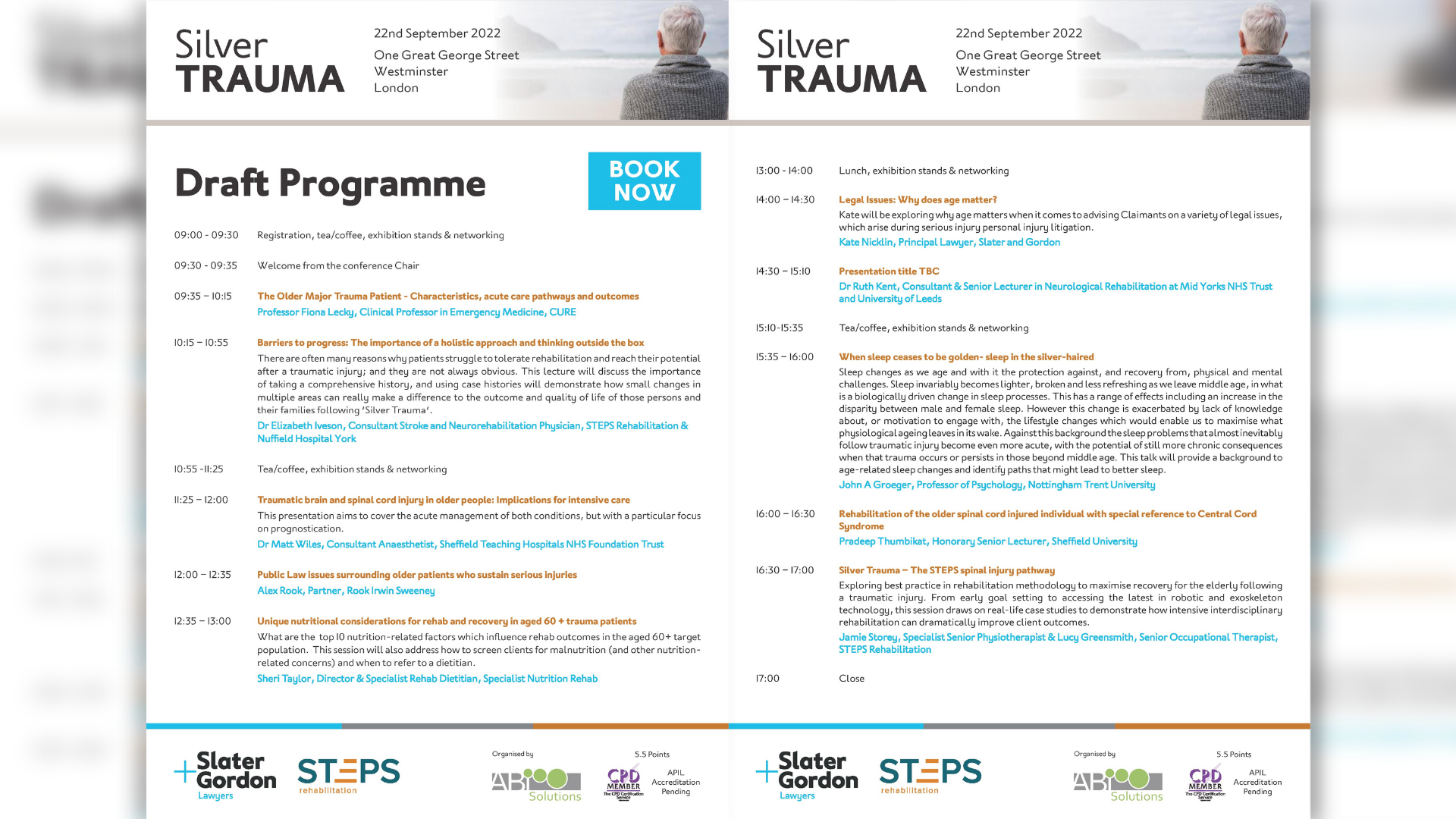
Putting silver trauma on the agenda


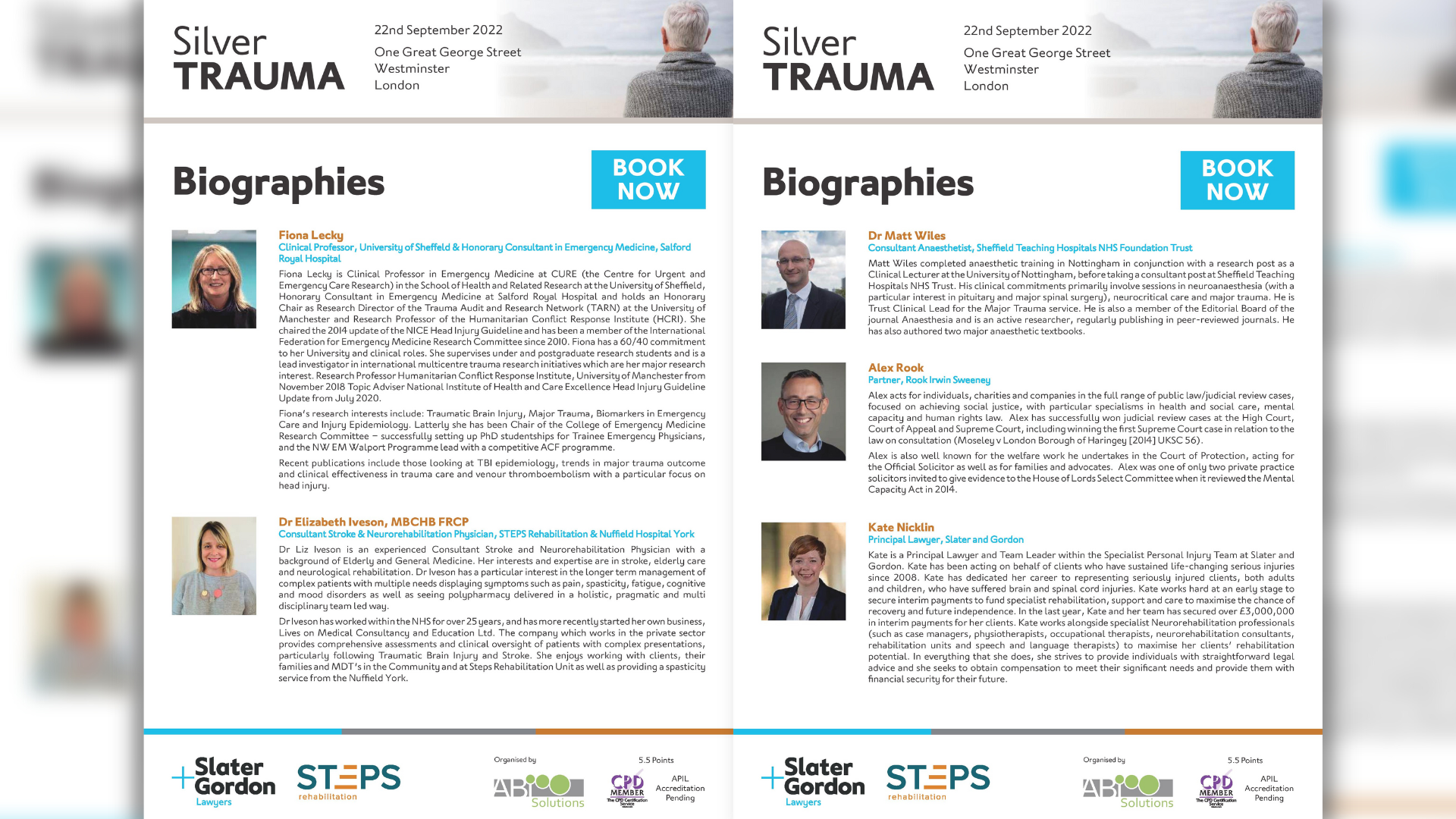
Nick Godwin, principal lawyer at Slater and Gordon and chair of the Silver Trauma Conference, previews why the event is shedding much-needed light on a vital topic.
It’s a real pleasure and an honour to be chairing the upcoming Silver Trauma conference in September, hosted by Slater and Gordon and STEPS Rehabilitation.
Whilst the topic of ‘Silver Trauma’ is not one that has attracted substantial focus previously, the older population in the UK now makes up a significant percentage of admissions into trauma units across the country, once largely the domain of adult males. The Silver Trauma conference will aim to highlight this growing area of medicine and clinical practice and the particular key legal issues that arise when older people sustain a serious injury.
Trauma rates in this age group have been increasing for some years and the over 65’s now account for over 50 per cent of hospital trauma admissions. Until relatively recently a typical trauma patient would be a young man; now, because of the UK’s shifting demographics, trauma patients are much more likely to come from the more elderly population.
The conference speakers will be exploring the topic of Silver Trauma from various different angles, including clinical, rehabilitation and legal viewpoints. They will be discussing the key issues faced by this group and how those issues subsequently impact upon clinical decision-making, rehabilitation and recovery potential following major trauma.
Ensuring people are not discriminated against because of their age is crucial and we will explore the fundamental decision-making processes and gain a clearer insight into them. As the UK population ages, with many older adults remaining fit, healthy and independent for many years, we will look at today’s viewpoints and consider if the current approaches properly address the particular needs of this group. This conference will be of interest to anyone working with older adults who have been seriously injured and the topics covered will be of relevance to anyone working with retired people, particularly the over 50’s.

 Built with Shorthand